
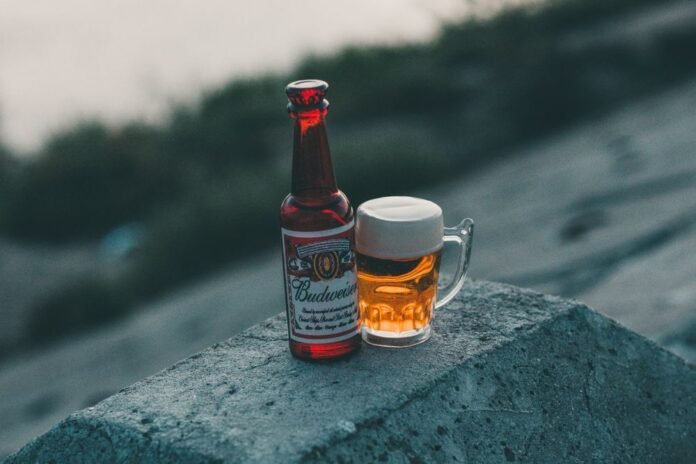
Three Anheuser-Busch breweries are closing in 2026, and some headlines are making it sound like the end of Budweiser. It is not. The company is restructuring, not shutting down.
This article breaks down what the closures actually are, why they are happening, what it means for workers, and whether there is any real reason to worry about the company’s future.
Anheuser-Busch Is Closing Three Breweries, Not the Company
Let’s get the main question out of the way first. Anheuser-Busch is not going out of business. It is closing three production facilities — one in Newark, NJ; one in Fairfield, CA; and one in Merrimack, NH — all scheduled for early 2026.
These are manufacturing plants. The company itself is still operating, and the brands made at those three locations are not being discontinued. Production is simply being moved to other U.S. breweries that are already running.
The Newark brewery has operated for nearly 75 years. It is a large, iconic facility, and its closure is a big deal for that community. But the property has been sold to the Goodman Group, a major industrial developer, who plans to convert the 3.2 million-square-foot site into industrial manufacturing and logistics space.
The Fairfield plant is the last Bay Area brewing facility Anheuser-Busch operates, which is why it is getting extra attention from local media in California. The Merrimack closure is the third piece of the same plan. In all three cases, the company has confirmed that beer production moves to other U.S. plants — it does not stop.
Who Actually Owns Anheuser-Busch
To understand why three plant closures do not threaten the whole company, you need to know what Anheuser-Busch actually is today.
In 2008, Belgium-based InBev completed a $52 billion acquisition of Anheuser-Busch. The combined company became Anheuser-Busch InBev, known as AB InBev. It is the largest beer company in the world. Budweiser is just one of dozens of brands in its global portfolio.
St. Louis remains the North American headquarters, and the company is ranked among the largest consumer product companies on the planet. At that scale, closing three facilities is a business adjustment — the same kind that large manufacturers make all the time.
Think of it like a national supermarket chain closing a few low-traffic stores while upgrading its higher-volume locations. That is not a company in crisis. That is a company managing its assets.
Why These Three Plants Are Being Closed
The company describes the closures as part of a broader strategy to optimize production. In plain terms, that means consolidating operations into fewer, more efficient plants.
Older facilities in high-cost locations are expensive to run. The Newark site alone covers 3.2 million square feet. Maintaining that kind of property in a high-cost state while running newer, more efficient breweries elsewhere is hard to justify financially.
Selling the Newark property to Goodman Group also gives the company real value from a legacy asset. Rather than continuing to pour money into an aging plant, they convert it into cash and redirect operations to facilities that cost less to run per barrel produced.
It is worth noting that the available sources do not link these closures to any specific marketing controversy or brand boycott. The company frames this purely as an operational decision, and there is no confirmed evidence pointing to another cause.
The simple analogy here: if you run 12 factories and three of them are old, expensive, and sitting on valuable real estate, closing those three and improving the other nine is not a retreat. It is a sensible reallocation of resources.
What Happens to the Workers
This is one of the most important parts of the story, and it deserves a straight answer.
Approximately 475 full-time employees across the three facilities are affected by the closures. Anheuser-Busch has said those workers will have two main options: transfer to roles at other U.S. operations, or take a severance package.
For employees willing to relocate, the company has indicated it will offer relocation support. That includes financial assistance for those who move to continue working at one of the other breweries.
That said, not everyone can or will want to uproot their lives and move to a different state for a job. For those workers and the communities around Newark, Fairfield, and Merrimack, the impact is real and significant. A brewery that has been part of a city for 75 years takes jobs, tax revenue, and local economic activity with it when it closes.
The fact that the company continues operating at a global level does not make the local loss any less meaningful. Both things can be true at the same time.
The $300 Million Investment That Does Not Fit the “Going Under” Story
Here is the detail that gets left out of most of the alarming headlines: while closing three older plants, Anheuser-Busch has announced a $300 million investment in U.S. manufacturing operations for 2025.
That investment includes building a new facility in Columbus, Ohio, along with upgrades to existing breweries and packaging operations across the country. Companies that are going out of business do not commit hundreds of millions of dollars to new domestic factories.
This is what makes the “going out of business” framing so misleading. The company is not shrinking its U.S. presence — it is restructuring it. Older, less efficient plants are being replaced by newer, better-equipped ones. The total footprint may get smaller in terms of number of locations, but the investment in remaining facilities is going up.
For anyone tracking this from a business perspective, the Columbus investment is the clearest signal of the company’s actual direction. You do not spend $300 million on U.S. manufacturing if you are planning to exit the U.S. market.
Will Budweiser Still Be Available?
Yes. The company has confirmed that production from the three closing sites will shift to other existing U.S. breweries. There have been no announcements about discontinuing Budweiser or any other major brand tied to these closures.
There may be some short-term logistics adjustments as production moves between facilities, but nothing in the available information suggests consumers will see Budweiser or other Anheuser-Busch brands disappear from shelves.
Local consumers near Newark, Fairfield, or Merrimack might feel a symbolic loss — especially knowing their local plant no longer makes the beer. But the product itself continues to be made and distributed nationally.
How to Read This Kind of Business News
When a large company closes a plant, local headlines often frame it in the most dramatic terms possible. “Last Bay Area brewery closing” sounds alarming. “Iconic Newark factory shuts down after 75 years” hits an emotional note. That framing is not wrong exactly — those things are true — but it can leave readers with the wrong impression about the company’s overall health.
Large manufacturers regularly close older facilities and invest in newer ones. It happens across industries — automotive, food production, consumer goods. It does not always mean the company is in trouble. Sometimes it means the opposite: that the company is spending money to stay competitive rather than propping up outdated infrastructure.
If you want to stay informed about how businesses make these kinds of decisions, Start Business Media covers practical business news and strategy without the hype.
The Bottom Line
Anheuser-Busch is not going out of business. It is closing three breweries — Newark, Fairfield, and Merrimack — as part of a production consolidation plan. The affected plants are being shut down, not the company.
About 475 workers will face a real choice between relocating or taking severance, and the communities around those breweries will feel the loss. That part is genuinely significant.
At the same time, the company is shifting production to other U.S. plants, selling legacy real estate to industrial developers, and investing $300 million in new and upgraded U.S. manufacturing. That is the full picture — not a collapse, but a restructuring that comes with real costs for real people in specific places.
If you see a headline asking whether Anheuser-Busch is shutting down, the short answer is no. The longer answer is that it is doing what large manufacturers often do: cutting where it makes financial sense and investing where it sees the future.
Read Also: