
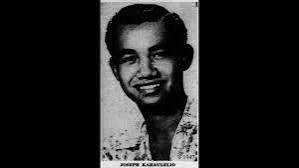
When researchers search Queen Liliʻuokalani’s family tree, one name consistently appears — Joseph Kaiponohea ʻAeʻa. But his exact relationship to the last Hawaiian monarch is widely misunderstood. Many people assume he was her biological child. Others see the name in a genealogy database and aren’t sure what to make of it.
This article covers who Joseph was, what the hānai relationship meant in Hawaiian culture, who his birth parents were, where he was educated, what he inherited, and why he still shows up in royal and genealogy records today.
Who Was Joseph Kaiponohea ʻAeʻa
Joseph Kaiponohea ʻAeʻa was a Native Hawaiian man born on June 22, 1882. He died on November 14, 1914, at just 32 years old. He is best known for being raised in the household of Queen Liliʻuokalani, the last reigning monarch of the Hawaiian Kingdom.
Liliʻuokalani gave him the nickname “Kaipo,” a shortened, affectionate form of his middle name. In some records, he also appears under the name Joseph Kaiponohea Dominis — a reference to the surname of the queen’s husband, John Owen Dominis.
It is important to be clear from the start: Joseph held no royal title and was not a reigning figure. He was a member of the royal household, closely connected to the queen through a traditional Hawaiian adoption practice known as hānai.
His Birth Family and the ʻAeʻa Name
Joseph’s biological parents were Joseph Kapeau ʻAeʻa and Kaheo ʻAeʻa. Available accounts describe them as Native Hawaiian retainers associated with Liliʻuokalani’s household. This is where the ʻAeʻa surname comes from — it was his birth family’s name, not a royal title.
A genealogy published in a Hawaiian-language newspaper in 1901 names members of the ʻAeʻa family, including Joseph ʻAeʻa and Kaiponohea ʻAeʻa. The record also identifies Kaiponohea as a Mahi. This genealogy is useful for understanding his birth-family background, but it should be read carefully and not treated as proof of royal bloodlines.
His birth-family line and his hānai connection to the queen are two separate parts of his identity. Mixing them together leads to the kind of confusion that shows up in many online family trees.
What Hānai Means and Why It Matters Here
Hānai is a traditional Hawaiian practice in which a child is raised by a family or household other than the birth family. It is not simply informal babysitting or temporary guardianship. In Hawaiian culture, hānai is a recognized and meaningful family relationship.
In 19th-century Hawaiʻi, hānai arrangements did not always follow the same legal steps as modern court-ordered adoption. The relationship was built on cultural recognition and mutual care rather than paperwork. Families understood and respected hānai bonds as real family ties.
Liliʻuokalani’s decision to raise Joseph as her hānai son was culturally significant and publicly acknowledged during her lifetime. She had no biological children. Her husband was John Owen Dominis, and together they raised Joseph within their household.
When you see Liliʻuokalani described as Joseph’s mother in a genealogy database, that label refers to this hānai relationship — not biological maternity. The distinction matters, especially for anyone trying to trace bloodlines accurately.
Education and Adult Life in Honolulu
Joseph received a formal education, which was consistent with his position within the royal household. He attended Fort Street School and ʻIolani College before going on to graduate from Kamehameha School for Boys in 1900.
Kamehameha Schools was — and still is — a well-regarded institution in Hawaiʻi with deep ties to Native Hawaiian history and the Pauahi Bishop Estate. Graduating from there in 1900 placed Joseph among a relatively small group of formally educated Native Hawaiian men of his generation.
As an adult, he worked as a stenographer and as a clerk in the Honolulu clerk’s office. These were practical, professional roles. According to available biographical records, he never married and had no children. There are no known descendants of Joseph Kaiponohea ʻAeʻa.
What Liliʻuokalani Left Him
In a 1909 deed of trust, Queen Liliʻuokalani named Joseph as a beneficiary. She left him Kealohilani, her residence in Waikīkī, along with the fishery grounds of Hamohamo.
This was a meaningful inheritance. Kealohilani was a real property with personal significance to the queen. Leaving it to Joseph reflected the depth of the hānai bond between them — it was not the gesture of a distant patron but of someone who considered him family.
It is worth keeping this in proportion, though. Receiving this property did not make Joseph a powerful political figure or a wealthy royal heir in the broader sense. He was a working man who held clerical jobs in Honolulu, and the inheritance did not appear to dramatically change the course of his short life.
His Death and Burial
Joseph Kaiponohea ʻAeʻa died on November 14, 1914, at Kealohilani — the very Waikīkī residence he had inherited from the queen. He was 32 years old.
Historical accounts describe the cause of death as Bright’s disease, which was a 19th and early 20th-century term for kidney-related illness. A structured biographical record uses the more clinical term nephritis. These two descriptions likely refer to the same underlying condition, though it is worth noting that medical terminology has changed significantly since that era.
His funeral was held at St. Andrew’s Cathedral in Honolulu. He was buried at upper Mānoa cemetery. These details suggest a funeral that reflected his place in Honolulu’s community — a church with strong ties to the Hawaiian monarchy and a burial in one of the city’s established cemeteries.
Why He Appears in Royal and Genealogy Records
Joseph Kaiponohea ʻAeʻa shows up in royal-connected records for straightforward reasons. He was a named member of Liliʻuokalani’s household, a stated beneficiary in her trust, and publicly acknowledged as her hānai son during her lifetime. That puts him in the historical record alongside her.
Online genealogy platforms like MyHeritage often include him in family trees connected to Liliʻuokalani. Some of those trees are user-submitted and may not clearly label his relationship type. That is where confusion tends to start — a reader sees his name linked to the queen and assumes a blood connection that was never there.
If you are doing genealogy research and encounter Joseph’s name, the key things to remember are these: his biological surname was ʻAeʻa, his birth parents were Joseph Kapeau ʻAeʻa and Kaheo ʻAeʻa, and his connection to Liliʻuokalani was through hānai adoption. He left no known descendants, so tracing a bloodline forward through him is not possible based on currently available records.
For anyone interested in Hawaiian history, royal household records, or the cultural practice of hānai, resources like the Nupepa Hawaiʻi archive — which preserves Hawaiian-language newspapers — offer primary-source material that goes deeper than most genealogy websites. Publications covering Hawaiian history and royal biography are also worth consulting for broader context.
If you enjoy reading carefully researched profiles like this one, Start Business Media covers a range of biographical and cultural topics worth exploring.
A Life Shaped by Two Families
Joseph Kaiponohea ʻAeʻa lived a relatively quiet life by most measures. He went to school, worked professional jobs in Honolulu, never married, and died young. What makes his story notable is not personal fame but his place at the intersection of two important threads — his Native Hawaiian birth family and his hānai relationship with one of history’s most significant figures in Pacific history.
He was not a monarch, not a political leader, and not a figure of his own celebrity. But he was a real person with a documented life, and understanding who he actually was helps correct the genealogical misreadings that still circulate today.
Liliʻuokalani chose to raise him, named him, gave him a nickname, and left him her Waikīkī home. In the context of Hawaiian culture, that says more about the nature of their bond than any title ever could.
Read Also: