
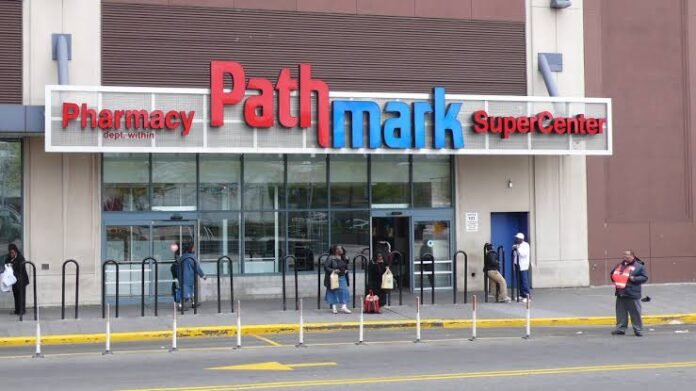
If you grew up in New Jersey, New York, or Long Island, Pathmark probably means more than low prices and frozen food aisles. For a generation, this supermarket chain was a familiar fixture — big blue-and-red signs, loud newspaper circulars, fluorescent lights buzzing above heaps of bananas. It was where your dad took you Saturday mornings and where every shortcut through the aisles ended in the cookie section.
But if you’ve driven past what used to be your local Pathmark, you’ve likely noticed: most of those stores are now something else — Stop & Shop, ShopRite, or maybe just an empty husk. The rumors swirl online: “Is Pathmark going out of business?” “Didn’t Pathmark already close?” The answer is both yes and no — and it’s a tale involving bankruptcy courts, grocery co-ops, and one of retail’s weirdest resurrection stories.
Let’s pull apart exactly what happened to Pathmark, and why you’re still seeing its name on new stores in 2024 — even after the company vanished almost a decade ago.
The Golden Era: Pathmark’s Wild Rise
For starters, Pathmark started as a simple question: what happens if you make a no-frills, full-size supermarket that undercuts everyone else on price? In 1968, A&P veterans and partners from the Wakefern Food Corp. (the ShopRite guys) spun Pathmark out into its own chain. By the ’80s and ’90s, Pathmark was a full-color staple in the Northeast.
At its peak, Pathmark operated over 140 supermarkets across New Jersey, New York, Pennsylvania, and Connecticut, and raked in billions in annual sales. The business was big — about as Northeast as a pork roll egg and cheese — with locations anchored in blue-collar neighborhoods and urban hubs. By the early 2000s, Pathmark was acquired by The Great Atlantic & Pacific Tea Company, known in retail as A&P: the original American supermarket juggernaut.
The grocery business is unforgiving, though. Margins are skinny (think ~1-2% on a good year), competition brutal, and national chains — Walmart, Stop & Shop, ShopRite, even dollar stores — began chomping away at Pathmark’s loyal base.
A Slow Fade to Black: The Fall of Pathmark Under A&P
Let’s get specific: Pathmark’s life as part of A&P was a wild ride, but not a happy ending. A&P, despite being America’s oldest grocer, was fighting for its life by the 2010s. Consumers were fleeing for discount grocers, the Great Recession took a heavy toll, and A&P’s debt load started looking like a chain dragging down a swimmer.
July 2015 brought the ax: A&P filed for Chapter 11 bankruptcy for the second time in five years. There were too many stores losing money, and creditors wanted their cash back — fast. Pathmark, so tightly knotted to A&P’s fate, got swept right up in the bankruptcy.
Union reps and news outlets reported the end in real time. By November 23, 2015, the lights were off at nearly every Pathmark, over 3,500 people were out of a job, and the “everything must go” banners hung limp above half-stocked abandoned shelves. This wasn’t a slow fade — it was liquidation, pure and simple.
By one count, the final Pathmark stores shut their doors in late November 2015. The closure of the Hackensack, NJ location, for many, symbolized the end of a 47-year-old institution. And that should’ve been that: the graying Pathmark logo, once a neighborhood signal, now relegated to local Facebook nostalgia groups alongside Caldor, Charlie Brown’s, and other ghosts of tri-state commerce.
The Resurrection Nobody Saw Coming: Pathmark’s Brand Revival
Hold up, though. Just because a company’s assets are sold off doesn’t mean its name vanishes forever. Pathmark “the company” was dead — but the Pathmark trademark itself was still for sale.
Here’s where grocery retail gets weird. In late 2016, Allegiance Retail Services, a cooperative owned by independent grocers (you might know their Foodtown or Freshtown banners), snapped up Pathmark’s intellectual property, including the name, logo, and those signature blue-and-red trademarks.
Why? Because nostalgia still prints money. Allegiance reasoned that no matter how many years passed or how many times a shuttered Pathmark got turned into an LA Fitness, thousands of shoppers still remembered the brand — and still trusted its “big store, small price” promise.
So, in 2019, in an abandoned Pathmark location in East Flatbush, Brooklyn, the sign went up again: PATHMARK, in massive neon, ready for business. This wasn’t a time capsule, though — it was one location, testing if the old name still packed a punch.
Pathmark Today: Fewer Stores, A New Playbook
Fast-forward a few years. While the rest of the industry has moved onto QR code coupons and dark-store warehouses, Pathmark in 2024 is a much smaller operation — but alive, and kind of plucky.
The Brooklyn Pathmark was, for a stretch, the only location flying the old colors. It’s a full-size supermarket, about 50,000 square feet of produce, deli, and shelf-stable groceries with bilingual signage and a throwback vibe. No, it’s not the 100-store empire it once was. But locals still debate whether it’s “the real Pathmark,” and the fact that families keep coming back for brisket and 99-cents-a-pound apples suggests the brand still carries weight.
Then, in May 2026, Allegiance lobbed something new into the mix: Pathmark Daily. This isn’t your granddad’s warehouse store. Instead, think compact, convenient, neighborhood-focused — a scaled-down grocery that swaps endless cereal aisles for grab-and-go meals, everyday basics, and quick service. The first Pathmark Daily launched in Long Island, in what used to be a Super Foodtown, and insiders say it’s a model intended to multiply in busy urban strips where mega-supermarkets are overkill.
If that sounds like a strange fit for a once-mighty supermarket chain, well, that’s retail in the 2020s. Big chains stumble. Brands die and get reborn as something else. The only thing certain: someone’s always looking to wring one more dollar out of a name you grew up with.
Parsing the Confusion: Two Pathmarks, Two Realities
This has led to the swirl of Google searches: “Is Pathmark going out of business — again?” Honest answer: it depends which Pathmark you mean.
The original Pathmark supermarket chain? Dead as disco, gone since 2015, though its bones live on as converted supermarkets across the Northeast.
Today’s Pathmark, though, is a lean operation. Operated by Allegiance, it’s run separately from A&P, with only a couple of locations and a new spin on the business. Allegiance isn’t knocking down walls to build new mega-stores. It’s seeing if the name (and some loyalists’ nostalgia) can punch above its weight in local shopping scenes.
So, when you see a new Pathmark banner swinging above a bodega-sized market in 2026, that’s not a ghost. It’s smart asset recycling. The business model might be different, but the argument is the same: sometimes a brand outlives the company that built it.
Why Pathmark Isn’t Out of Business — But Also Isn’t “Back” Like Before
At large, the “Pathmark is going out of business” line was true in 2015. The original company, staff, vendors — all that’s gone. But the Pathmark brand name, now owned by Allegiance Retail Services, lives a new life on a much smaller scale.
Here’s the catch: the continued existence of Pathmark today hinges on what was bought from the bankruptcy court. Allegiance owns the trademark, logo, and certain recipes, not the sprawling warehouse network or old debts. This means they can put “Pathmark” on any store they want (provided they meet quality standards and pay the royalty fees), even if the original stores have new purposes.
In effect, it’s a business-style afterlife. Like when RCA brought back “Dynagroove” vinyl records, or RadioShack resurfaced as an online electronics site, Pathmark’s value is in its name and public memory, not its dated real estate or inventory systems.
For anyone looking for hard evidence, trade sources confirm it: Allegiance is not in the process of liquidating or closing the Pathmark banner again. In fact, the chain is in measured expansion — one Brooklyn store and the new Pathmark Daily mini format out on Long Island. By one estimate, that’s fewer than five stores in total, but numbers are growing (if slowly).
If you follow supermarket mergers and brand resurrections — or just appreciate a curious business story — you’ll appreciate that this is neither a corporate comeback nor a rote nostalgia act. It’s somewhere in-between: a franchise revival leaning on legacy, but adapting for the modern grocery environment.
The Business Case for Resurrected Supermarket Names
If you’re a business operator, the Pathmark saga should send up a dozen signal flares. Brands don’t die; they go dormant. Smart operators pounce on what’s left. Allegiance Retail Services didn’t buy Pathmark for its inventory (long since liquidated) or its ancient cash registers. They bought a shortcut into customer memory — a cheap way to grab attention without paying to build a name from scratch.
And here’s the kicker: in a noisy, competitive space, recognition matters. Customers will pay a small premium for a name they know, even if the store is technically brand-new. For Allegiance, that means betting small but dreaming medium — scaling by opening compact, neighborhood groceries before dusting off the big superstores.
As covered on InBusinessVoice.com, smart retail operators often reuse “dead” brands as an engine for comeback stories. They treat the old name like a valuable plot of downtown land — maybe you bulldoze the house, but you keep the address. That’s exactly what’s happening at Pathmark.
Conclusion: The Real Status of Pathmark, Then and Now
To close the loop: Pathmark (the supermarket company) shuttered for good in 2015 when A&P went bust. Every original Pathmark store was closed, liquidated, or snapped up by rivals. That part of Pathmark’s story is sealed — a relic of regional supermarket wars and unforgiving business realities.
But Pathmark (the brand) persists, revived and adapted by Allegiance Retail Services as a limited-scale, operator-friendly retail badge. Right now, you’ll find a couple of locations: one traditional supersized market in Brooklyn, and an experimental “Pathmark Daily” on Long Island, with hints of more to come.
Will Pathmark ever retake its old crown? Odds are slim, but never say never in grocery — as any post-bankruptcy brand could tell you. What counts is that Pathmark, at least in this new form, isn’t going out of business today. Its logo still means something to shoppers, and for the moment, that’s enough to keep the lights on.
So next time you spot that familiar sign, don’t call it a comeback — call it a reminder that in retail, the end is never quite the end. Brands are like old sitcoms: as long as someone, somewhere, remembers the jingle, there’s always a shot at one more season.
Read Also: