
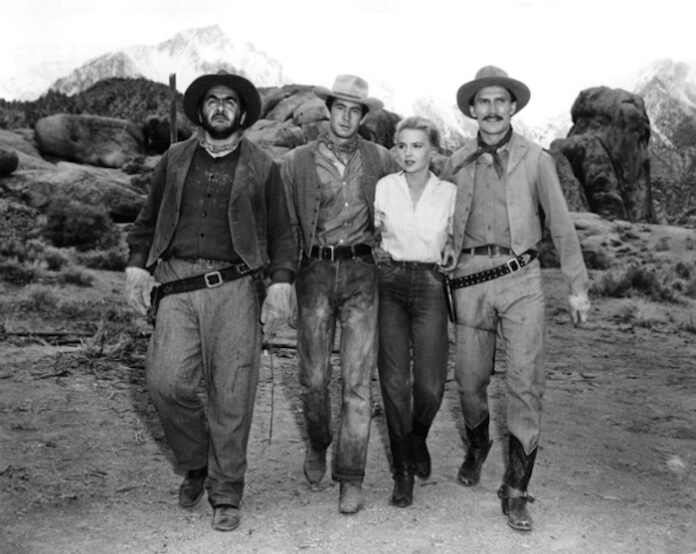
Most people recognize the name Van Cleef from the big screen. Lee Van Cleef spent decades playing cold-eyed villains and sharp-edged gunslingers in classic Westerns. That image was hard to shake. But behind the camera, there was a quieter story — a father with a family, a first marriage, and children who grew up mostly outside the spotlight.
Alan Van Cleef is one of those children. He is not a celebrity. He has not chased fame. But he is one of the few people who has spoken openly about what Lee Van Cleef was actually like as a parent, and that makes his story worth telling carefully and honestly.
This article covers what is publicly known about Alan Van Cleef — his background, his childhood, his relationship with his father, and why detailed information about his private life remains limited.
Who Alan Van Cleef Is
Alan Van Cleef is the son of actor Lee Van Cleef and his first wife, Patsy Ruth, born Patsy Ruth Kahle. According to genealogy records on MyHeritage, Alan was born in 1947. That birth year comes from a database entry, so it should be treated as a reference point rather than a fully confirmed primary document.
He is not a public figure in his own right. Most people who search for his name are really looking for more information about his father. Alan has stayed out of the entertainment industry and largely out of public view.
It is also worth being clear upfront: Alan was not Lee Van Cleef’s only child. Lee had two other children with Patsy Ruth — a daughter named Deborah and a son named David. His later family included a daughter named Denise, connected through adoption during his second marriage. Any account that describes Alan as Lee’s sole child gets the family history wrong.
Lee Van Cleef’s First Marriage and Family
Lee Van Cleef married Patsy Ruth Kahle in 1943. At the time, he was not yet an actor. He worked various jobs before breaking into Hollywood, including factory work and accounting. His acting career came later, and his real fame — particularly through Sergio Leone’s Spaghetti Westerns — came later still.
Lee and Patsy Ruth had three children together: Alan, Deborah, and David. The marriage eventually ended. Some sources note 1958 as the year of separation, while others cite 1960 as when the divorce was finalized. The difference likely reflects the gap between when the couple separated and when the legal process concluded.
After the marriage ended, Lee went on to marry twice more. His second wife was Joan Marjorie Drane, and his third was Barbara Havelone. Denise, who was adopted, was part of the family structure that came from his second marriage.
Lee Van Cleef died in December 1989 at age 64. The New York Times obituary described a career that spanned roughly 90 films and more than 100 television roles. He was survived by his children, including Alan.
Alan’s Childhood and His Parents’ Divorce
Alan grew up in New Jersey during his early years. That tracks with his father’s roots — Lee Van Cleef was born and raised in Somerville, New Jersey, and the family stayed in the state during his early career years.
When his parents separated around 1958, Alan was somewhere between 11 and 13 years old. It was not an easy age for a family to split up, but Alan’s own recollections, shared years later in a newspaper feature by journalist Mark Woods for the Florida Times-Union, suggest he maintained a real relationship with his father after the divorce.
After the separation, Alan attended high school in Athens, Georgia. He also continued to visit his father during the summers. That ongoing contact clearly shaped how Alan remembered and talked about Lee as an adult.
The details in this section come directly from Alan’s own account as reported by Woods in 2016. That article remains one of the strongest sources available for personal information about Alan’s life, because it draws on Alan’s own words rather than secondhand summaries.
What Alan Said About His Father Away From the Camera
This is where Alan’s perspective becomes genuinely interesting. Lee Van Cleef built a career on playing characters who were dangerous, cold, or morally complicated. His stare alone could carry a scene. So what was he actually like at home?
According to Alan, he was nothing like those roles.
Alan described his father as one of the nicest people someone could meet. He did not portray Lee as a strict or intimidating parent. In fact, the picture Alan painted was of an affectionate and fairly ordinary dad — someone who took his kids to Knott’s Berry Farm and was present and warm in ways that had nothing to do with the menacing figures he played on screen.
That contrast between screen image and home life is not unusual for actors of that era, but it is still striking when you consider just how convincing Lee’s villainous roles were. For many fans, it is genuinely surprising to hear that the man who glared down Clint Eastwood in The Good, the Bad and the Ugly was remembered by his son as a gentle and kind father.
Alan’s account is one of the few direct, named-source windows into Lee Van Cleef’s private family life. That makes it valuable — not as celebrity gossip, but as a human detail that rounds out a complicated public image.
Alan’s Brief Exposure to the Film World
After Alan finished high school, Lee extended an invitation: come visit the set of Barquero, a 1970 Western in which Lee starred. It was clearly a gesture from a father who wanted his son to see what his working world looked like, and perhaps to find out whether Alan had any interest in a film career himself.
What came of that visit, in terms of any acting ambitions or industry connections, is not clearly documented in available sources. The visit is confirmed, but Alan did not go on to become a recognizable name in Hollywood. The Barquero set experience reads more as a meaningful father-son moment than the beginning of a career path.
It is a good reminder that growing up with a famous parent does not automatically lead to following in their footsteps. Alan’s story suggests he took a different direction entirely.
Alan’s Family and the Next Generation
One detail from the Florida Times-Union feature stands out as a small but interesting family footnote. Alan has a middle son who was given the name Alan Lee Van Cleef — but who reportedly went by Lee rather than Alan. That son grew up to work as an engineer and served as an officer in the Air National Guard.
It is a quiet way for the Van Cleef name to carry forward — not through Hollywood, but through service and a technical career. There is no suggestion of a family acting dynasty here, just a family name passed down with some care and affection.
For readers who enjoy tracing how famous names move through generations, this detail is worth noting. It also underlines how private Alan’s branch of the Van Cleef family has remained compared to the public profile of its most famous member.
Where Things Stand Today
Reliable, current information about Alan Van Cleef’s life today is limited. He has not pursued public recognition, and no recent verified sources offer detail about his current activities, location, or personal life. Any article that claims specific current information about Alan without a named, credible source should be read with skepticism.
What we do know is confirmed by solid sources: he was born around 1947, he is the son of Lee Van Cleef and Patsy Ruth Kahle, he grew up in New Jersey, attended high school in Georgia, and maintained a relationship with his father through visits and shared experiences. He spoke thoughtfully about his father to a journalist in 2016, and what he said was generous and human.
If you are researching the Van Cleef family history more broadly, resources like Start Business Media can point you toward well-sourced reference material on classic Hollywood families and legacy topics.
Final Thoughts
Alan Van Cleef is not famous. He has not asked to be. But his connection to Lee Van Cleef — and more importantly, his willingness to share honest memories of a father the world mostly knew through film roles — makes him a worthwhile subject for anyone curious about the real people behind classic-Hollywood names.
Lee Van Cleef gave audiences decades of unforgettable screen moments. What Alan’s account adds is something different: a reminder that behind those cold, calculating characters was a man who took his son to an amusement park and was remembered, most of all, for being kind.
That is not a small thing. And it is probably the most honest thing we know about Alan Van Cleef’s life.
Read Also: