
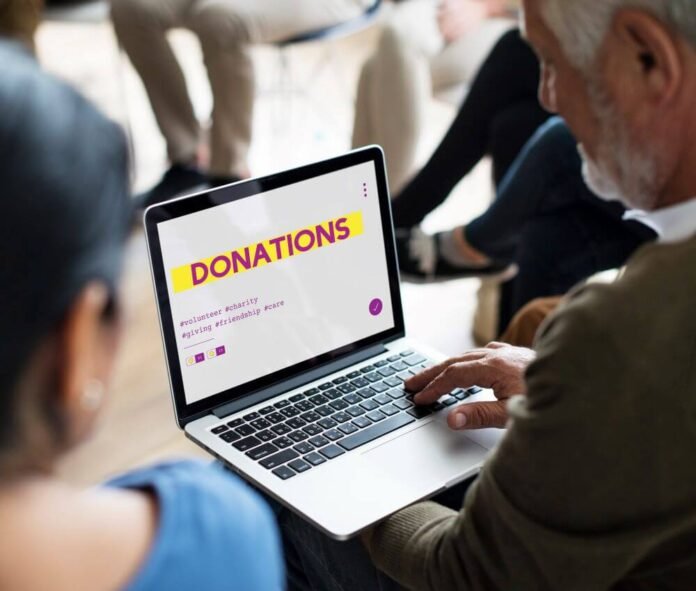
Online giving is no longer a side channel. Charity Digital reports that 60% of all charitable donations in 2025 were processed online, and that the share of donors choosing to give online has been steady since 2022. Digital is now the default.
The harder question is how to turn that default into more income. Just 50% of UK adults gave to charity in 2024, down from 58% in 2019, so charities cannot rely on goodwill alone. The right fundraising platform is one of the most practical ways to close the gap. Here is how.
1. They remove friction at the moment of intent
A supporter who feels moved to give will not tolerate a long form, a forced account sign up or a clunky checkout. Every extra step loses donations.
Digital wallets show how much this matters. goDonate’s analysis of donations on its platform found that almost 40% of one off donations were made by digital wallet. A fundraising platform that offers Apple Pay and Google Pay, with a short, mobile first form, lets a donor give in seconds. A charity relying on a basic card form is quietly losing gifts it never sees.
2. They help turn oneoff donors into regular givers
Regular giving is the most valuable income a charity can build, because it is predictable and compounds over time. Platforms make it easy to offer a monthly option at the point of the first gift, rather than as an afterthought.
The same goDonate data shows direct debit still accounts for 60% of regular giving, with credit card at 24% and digital wallet at 16%. Its 2023 figures showed monthly regular giving income up 17% year on year, with digital wallets and cards making up 40% of regular gifts. Offering a choice of payment methods across the donor journey widens the pool of people who will commit.
3. They capture peak giving moments
Giving is highly seasonal and event driven, and a platform that can handle a surge without failing is essential. goDonate’s 2026 Online Christmas Donations Insights Report found that 24 December 2025 alone accounted for 6.2% of the month’s donation volume, and that Giving Tuesday has become a meaningful UK fundraising moment.
Platforms with campaign pages, scheduling and reliable uptime let charities plan for these spikes. Their reporting also shows when donors actually give, so appeals can be timed around real behaviour rather than assumptions.
4. They make Gift Aid and compliance simpler
Gift Aid adds 25p to every £1 given by a UK taxpayer, but only if the declaration is captured correctly. Good platforms build it into the donation flow, prompting the donor at the right moment and storing the details cleanly, so fewer eligible gifts go unclaimed. They also handle secure payment processing and data protection, which reduces the administrative burden on small teams.
5. They power peer to peer and community fundraising
Some of the most effective fundraising comes from supporters asking their own friends, family and colleagues to give. Platforms provide the tools for this: individual fundraising pages, team pages, event pages and social sharing. Each fundraiser becomes a new route to people the charity could not have reached directly, and each of those donors is a potential long term supporter.
6. They give charities data to test and improve
Many charities want to do better digitally but lack a clear plan. The 2025 Charity Digital Skills report found that 60% of UK charities find it difficult to make progress with digital fundraising, and only 44% have a digital strategy in place.
Platform analytics help here. Conversion rates, average gift size, payment method mix, drop off points and donor retention all show what is working. Charities can then test form layouts, suggested amounts, default giving frequencies and thank you journeys, and keep what raises more.
What to look for in a fundraising platform
- A mobile first, fast checkout with digital wallets and card payments
- Easy regular giving set up at the first donation
- Built in Gift Aid capture and reporting
- Peer topeer and event tools for community fundraisers
- Integration with your CRM, so donor data does not sit in silos
- Clear, transparent fees and reliable support during peak periods
The bottom line
Donation platforms do not create generosity, but they decide how much of it a charity captures. By cutting friction, encouraging regular giving, handling peak moments, simplifying Gift Aid and supplying the data to keep improving, the right platform helps charities turn the same supporter interest into more money for their cause.